


In the post-digital age, various digital technologies and our lives are inseparable. The digital education technology industry developed rapidly. In addition, the pandemic has urged this industry explosively in an instant, and it has even reached a hundred flowers. However, many teachers still face many difficulties and obstacles in using digital technology in their teaching. According to Revora, A. in his research, less than 50% of teachers are willing to take the risk of using digital technology. (Rebora, A., 2016) The actual numbers may be less than what he has studied. We should understand even if the school can back to the days of face-to-face teaching in the past. The growth of digital learning is unstoppable. (Terada, Y., 2020) How to help teachers break through this barrier in mentality and behavior will help students learn digital technology and play an essential role in working and living in the digital world in the future.
Roadblock:
Terada’s article points out ten reasons that discourage teachers not use electronic technology for teaching. 1. technology is not always welcome for learning; 2. difficult in choosing suitable device; 3. distracted Students; 4. Influence the teaching process or flow; 5. luck of professional development; 6. limitation of technology access; 7. students protection; 8. distrust of technology; 9. lick of ICT support and infrastructure; and 10. create extra tension in the classroom. (Terada, Y., 2020) And I try to combine it into three main reasons. (1) Technical and support limitations, (2) Hardware and environmental restrictions, and (3) values and doubt of benefits can bring to students.
(1) and (2) both can go through PD or institute increased ICT support workforce, and upgrading infrastructure can solve some difficulties. Of course, I will never deny the function and coordination that the education coach can produce in these problems or throughout the institute. However, considered the most valuable and needed, it must be ve teachers’ thinking and practice must be the breakthrough. And as a coach should spend more time face to face with the teacher to face the difficulties they face in daily life and assist them in finding breakthrough opportunities and methods from these difficulties. (Toll, C., A.)
Coaching:
As a coach, you must keep your cred and set boundaries. (Purcell, M., 2020) Or a lot of information and skills that can provide to the trainee. But as a coach, it is easy to forget the difficulties and challenges that trainee faces in the daily work process. Perhaps important is how to maintain comprehensive and macroscopic thinking as a coach. Yet be able to reposition on the same line as the trainee, and use their vision and perspective to understand the difficulties and challenges they face, Assist them in problem-solving, and continue to cheer them up with trainees.
Solutions:
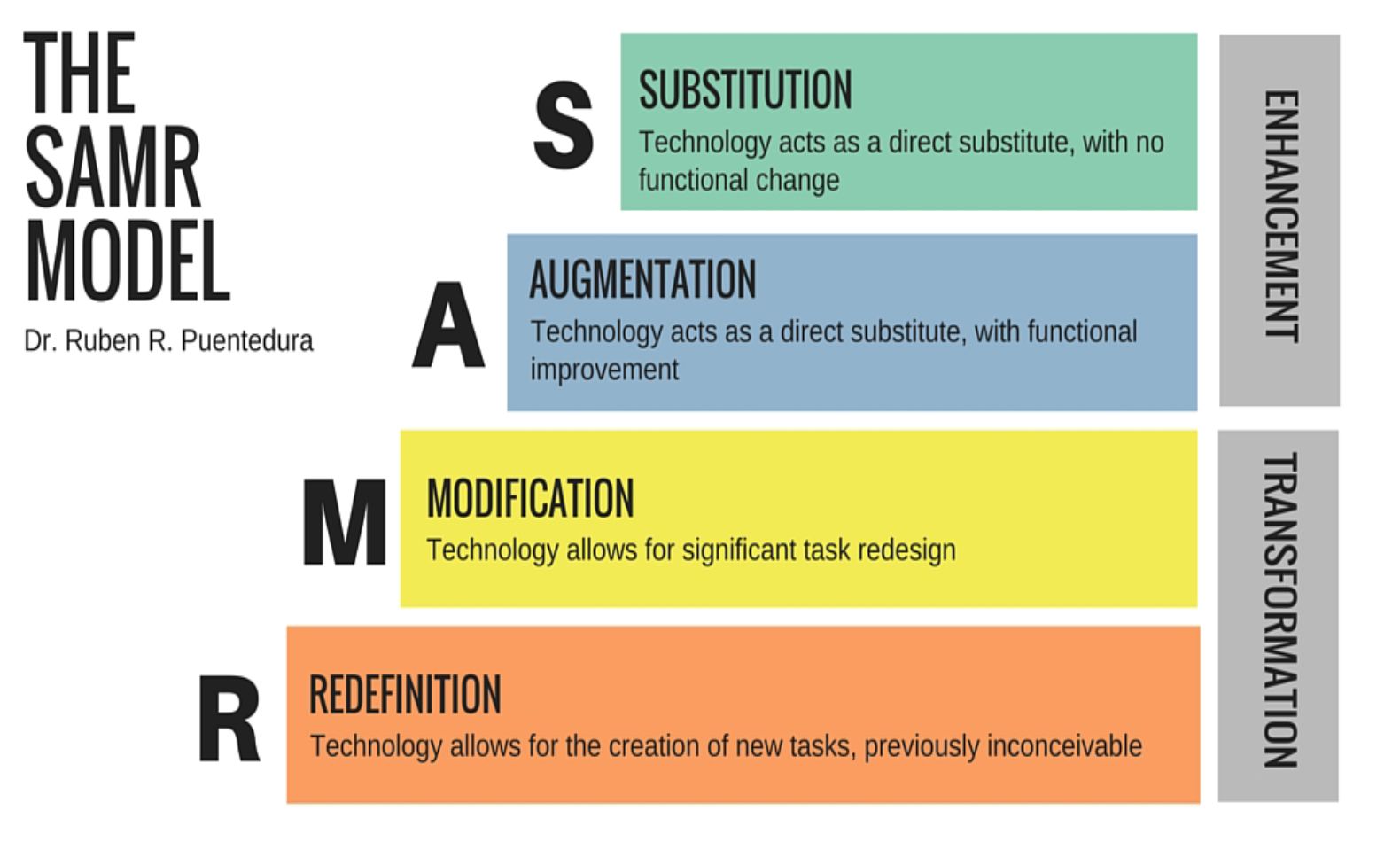
Through coaching, in individual or group form, teachers can set goals from the most straightforward small software step by step or an effective way to break through doubts about using digital teaching. SAMT Model created by Dr. Ruben R. Puentedura can be a helpful model. Through coaching, in individual or group form, assist teachers in setting goals from the most straightforward small software step by step or an effective way to break through doubts about using digital teaching.
Coaches can use the SAMT model to create a plan with two phases and four milestones. The first phase is an enhancement, including (S) Substitution and (A) Augmentation, two milestones. In the substitution stage. Teachers can use simple software such as PDF, doc file, etc., replace traditional worksheets, or scan and post classroom content in Google Drive or any cloud storage. At this stage, teachers do not need to pay attention to their classroom content and Make any changes to the process. Just use digital technology to replace the traditional methods of publishing to students. (Terada, Y., 2020) Secondly, in the augmentation, Teachers can introduce more interactions in digital technology, such as multimedia digital portfolios, online quizzes, etc. (Terada, Y., 2020). After completing these two stages, the coach can conduct a review with individual or group teachers to share what they find success in the process or what difficulties they encounter. The coach can lead the group to help each other find solutions to problems.
Go into the second phase; this is a Transformation stage, which also has two milestones: (M) Modification and (R) Redefinition. At this stage, teachers or schools start to introduce (LMS) Learning Management System, such as Google Classroom or Canvas. To reach this level, the course content and digital system should have an integrated effect. The content design may need to be adjusted to a certain extent to meet my needs. For example, the teacher will make the teaching into a video or have PPT assistance. (Terada, Y., 2020) After that, Teachers can consider introducing different collaborations to communicate and communicate with people in other places and not outside the classroom through digital teaching tools. (Terada, Y., 2020) Again, the coach can reflect with the teacher or the small group after the phase.
The SAMT model, At the same time, can also be used by teachers as an indicator to check whether the digital teaching tools they choose can achieve their desired goals. For example, (M) Modification and (R) Redefinition have been used as standards. Can the application help teachers be effective? Manage the homework submitted by students, score, and provide comments about enhancing the interaction and communication between teachers and students. Having such a direction and standard will significantly reduce teachers’ worries about using new applications because they are confused. Effectively improve teachers’ breakthrough and willingness to take risks using digital teaching tools.
Reference:
Rebora, A., (2016), Teachers still struggling to use tech to transform instruction, survey finds.
Terada, Y., (2020), A powerful model for understanding good tech integration. https://www.edutopia.org/
Toll, C., A. educational coaches: what they do, what they don’t, how you benefit. https://www.bamradionetwork.com/track/educational-coach-what-they-do-what-they-don-t-how-you-benefit/
Purcell, M., (2020). 5 Lessons I’ve learned as an instructional coach. https://www.edtechteam.com
